Equestrian Numbers 3D SVG: A Designer's Review
When evaluating digital assets for mixed-media projects, the transition from screen to physical product is where the true test lies. As a designer who frequently bridges the gap between vinyl cutting and needlework, I approached the Equestrian Numbers 3D SVG collection with a specific lens: does this file translate effectively into a tangible, high-quality handmade product? While marketed primarily for Silhouette Studio and Cricut Design Space users, the structural integrity of these shapes offers significant potential for embroidery designers and apparel decorators looking to create dimensional, textured finishes. This review explores how this specific 3D SVG collection performs when adapted for real-world application, specifically focusing on its viability for custom apparel and boutique merchandise.
First Impressions and Visual Personality
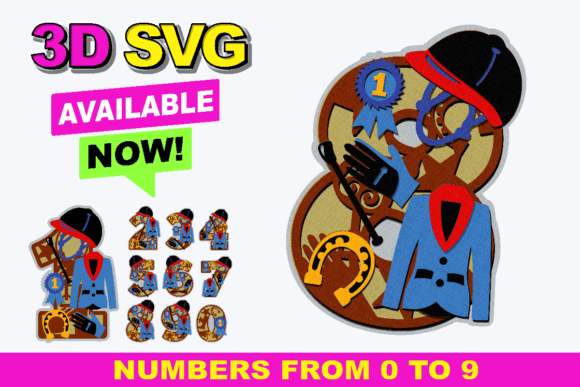
Upon extracting the zipped folder containing numbers 0-9, the immediate impression is one of clean, purposeful geometry. The "3D" aspect of this SVG is not merely a visual filter; it implies layered depth that is crucial for both cutting machines and embroidery digitizing. For an embroidery designer, flat vectors often require significant manipulation to become interesting stitch files. However, the Equestrian Numbers 3D SVG provides built-in segmentation. The lines define natural break points for color changes or fabric layers, which is essential when converting a vector into an applique design or a multi-layered satin stitch composition.
The mood created by these shapes is distinctly equestrian yet modern. They avoid overly ornate serifs that can get lost in thread, favoring bold, legible forms that maintain their character even when scaled down. This visual personality makes them ideal for projects that need to balance tradition with contemporary aesthetics. Whether you are designing for a competitive rider or a casual horse enthusiast, the typography feels professional rather than cartoonish. This maturity in design is critical for Etsy sellers and small shop owners who need their finished products to command higher price points based on perceived quality.
Real-World Application: The Custom Sweatshirt Test
To truly judge the utility of this machine embroidery design asset, I mentally prototyped a project that is currently trending in the craft business sector: a personalized crewneck sweatshirt featuring a barn number or competition year. In this scenario, the Equestrian Numbers 3D SVG serves as the focal point. When adapting this for sweatshirt embroidery, the 3D layering suggested by the SVG file translates beautifully into a combination of fill stitch backgrounds and satin stitch borders.
In a practical stitching scenario, this design allows for excellent texture contrast. Imagine using a matte cotton thread for the base layer and a high-sheen rayon or polyester for the top dimensional layer. The separation in the original SVG file guides the digitizer to create distinct zones, preventing the muddy look that occurs when complex details are crammed into a single stitch plane. For a handmade product intended as a holiday gift or team uniform, this clarity ensures the number remains readable from a distance while rewarding close inspection with tactile detail. The result is a personalized gift that feels engineered rather than hastily stitched, directly impacting customer trust and brand consistency.
Navigating Fabric Limitations and Hoop Constraints
Despite the versatility of the Equestrian Numbers 3D SVG, practical judgment dictates caution regarding substrate selection. Because this is a 3D style design, it inherently carries more stitch density than a standard outline font. When working with thin fabrics like lightweight tea towels or delicate baby clothes, the weight of the thread can cause puckering or distortion if not properly managed. I would advise against using the full 3D effect on sheer materials unless you are employing a heavy-duty stabilizer and potentially a topping to prevent stitch sink.
Stretchy fabrics present another challenge. If you are creating custom apparel using performance knits, the rigid nature of a dense 3D number can fight against the fabric's drape. In these cases, consider modifying the embroidery file to reduce the underlay or convert the inner layers to running stitch accents rather than solid fills. Additionally, hoop size plays a pivotal role. These numbers are bold, and scaling them down too aggressively to fit a small 4x4 hoop may result in lost interior detail. Always verify the minimum viable size before committing to a production run. For curved surfaces like caps, the 3D stacking method works exceptionally well, as the structure of the hat supports the density better than a flat t-shirt would.
Enhancing Product Value and Commercial Viability
For creative entrepreneurs and commercial embroidery businesses, the value of a digital embroidery file lies in its ability to generate repeat sales. The Equestrian Numbers 3D SVG excels here because of its modularity. Having the complete set 0-9 means you can service a wide range of clients without purchasing additional assets. From marking stall doors on canvas tote bags to personalizing saddle pads and aprons, the consistency of the typeface ensures that all your small shop products look like they belong to a cohesive collection.
This cohesion is vital for printable mockups and digital product previews. When listing items online, the clean lines of this 3D SVG allow for crisp rendering in mockup software, helping buyers visualize the final embroidered patch or garment accurately. Furthermore, the professional aesthetic reduces the risk of returns due to "design not matching description." By utilizing a high-quality source shape, you elevate the perceived value of your work. Customers recognize the difference between a generic clip-art stitch-out and a thoughtfully constructed design asset, and they are willing to pay a premium for that level of craftsmanship.
Essential Technical Notes for Makers
Before loading this design into your machine or listing it in your store, adhere to these practical protocols to ensure success:
- Test Stitch on Scrap: Never assume the digital preview matches the physical output. Always test the design on a scrap of the exact fabric and stabilizer combination you intend to use for the final project.
- Verify Licensing: While the download includes the SVG files, always confirm the specific license terms regarding commercial use of finished products versus selling the digital embroidery file itself.
- Check Thread Contrast: The 3D effect relies on shadow and highlight. Test thread colors in both natural and artificial lighting to ensure the dimensionality reads correctly on dark versus light fabrics.
- Stabilizer Selection: Due to the potential density of a 3D interpretation, use adequate stabilization. Cut-away stabilizer is generally preferred over tear-away for apparel to support the stitch weight long-term.
- Mockup Validation: Create black and white mockups alongside color versions. If the design loses its 3D impact in grayscale, you may need to adjust the spacing or border width in your digitizing software.
- File Compatibility: Although optimized for cutting software, ensure you have the correct conversion tools or digitizing software to transform this SVG into a format your embroidery machine recognizes (PES, DST, JEF, etc.).
The Equestrian Numbers 3D SVG represents a strong foundation for makers who understand that great embroidery starts with great vector art. By respecting the technical requirements of stitch density and fabric interaction, this collection can become a staple in your library for creating high-end, personalized equestrian goods. Whether you are crafting a bespoke show jacket number or a line of boutique stable wear, the thoughtful application of this design will reflect positively on your brand's reputation for quality and attention to detail.