Valentine Teddy Bear Elements 3D SVG Review
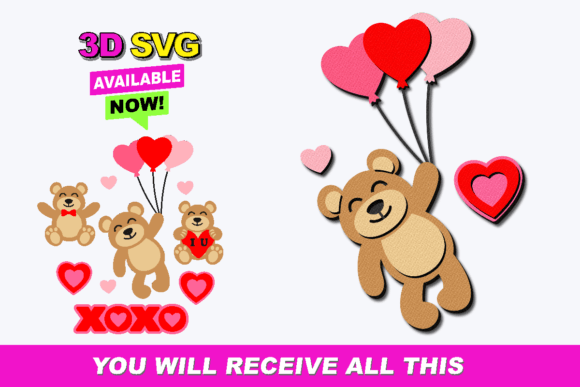
As a designer who bridges the gap between digital cutting files and needle-and-thread execution, I approach every new asset with a specific question: will this actually translate to a high-quality finished product? When evaluating the Valentine Teddy Bear Elements 3D SVG, my perspective shifts from simple graphic design to practical embroidery application. While this collection is marketed as a 3D SVG for cutting machines like Silhouette Studio and Cricut Design Space, its true value for makers lies in its potential as a layered applique design or a mixed-media embroidery project. The three layered files included in the zipped folder offer a structural blueprint that, when interpreted correctly, can elevate a standard holiday item into a premium handmade product.
First Impressions and Visual Personality
Upon opening the download, the immediate strength of these shapes is their distinct separation of elements. For an embroidery designer, "3D" usually implies foam or heavy texture, but in the context of this SVG, it refers to visual depth through layering. This distinction is crucial. The mood is undeniably nostalgic yet clean, avoiding the cluttered aesthetic that often plagues Valentine’s Day graphics. The bear elements possess a softness in their geometry that suggests they were intended for fabric rather than rigid paper. This organic flow is essential because sharp, jagged vector points often result in poor stitch registration when converted into a machine embroidery design. These shapes feel forgiving, allowing for the natural push-and-pull distortion that occurs during stitching without losing the recognizable teddy bear silhouette.
Real-World Application: The Custom Sweatshirt Test
To truly judge the viability of Valentine Teddy Bear Elements 3D SVG, I mentally prototyped a custom apparel project specifically targeting the current market demand for boutique-style sweatshirts. Imagine preparing a cream-colored French terry sweatshirt for an Etsy listing. Using these layered files, you would cut three distinct fabric pieces—perhaps a minky for the base, a cotton print for the vest, and a felt for the facial details. In this scenario, the SVG acts as your precision pattern for a raw-edge or turned-edge applique design.
The advantage here is alignment. When creating sweatshirt embroidery, registration is everything. Because these files are designed to layer digitally, they provide perfect guides for placement stitches. You can use a running stitch to mark where each layer belongs before applying the final satin stitch border. This method transforms a flat graphic into a tactile experience. Customers perceive this dimensional quality as higher value compared to a standard fill stitch embroidery file. For small business owners, this efficiency means less time digitizing from scratch and more time focusing on thread colors and production speed. The resulting product feels intentional and professionally crafted, which directly influences buyer engagement and trust in your shop.
Navigating Fabric Constraints and Hoop Sizes
However, practical design judgment requires acknowledging limitations. Not every substrate plays nicely with layered 3D elements. If you plan to use Valentine Teddy Bear Elements 3D SVG for baby embroidery, extreme caution is necessary. The bulk created by multiple fabric layers plus stabilizer can be uncomfortable against sensitive skin. For baby items, I recommend using this design only on external items like nursery decor or blanket bindings, rather than onesies worn directly against the body.
Fabric texture also dictates success. On smooth cotton or polyester blends, the edges of the SVG shapes will remain crisp. On textured fabrics like fleece or terry cloth, the layers may get lost or shift during stitching. In these cases, a heavier weight stabilizer is non-negotiable to prevent tunneling. Additionally, consider your hoop size. While the digital files are scalable, reducing them too small for a 4x4 hoop may cause the layered sections to overlap excessively, creating a dense, bulletproof patch that could damage delicate garments. Always verify the physical dimensions against your machine’s capabilities before committing to a commercial embroidery run.
Strategic Use Cases for Makers and Sellers
Beyond apparel, these shapes excel in specific niches where dimensionality adds perceived worth. Tote bag designs benefit immensely from this style; the sturdy canvas supports multiple layers without warping, making it ideal for craft fair products. Similarly, embroidered patches are a fantastic application. By utilizing the layered SVG as a cutting guide for chipboard-backed fabric, you can create professional-grade patches with clean edges that stand out at markets.
For digital product sellers and creative entrepreneurs, these files serve a dual purpose. They are excellent assets for creating printable mockups. Before you even thread a needle, you can arrange the Valentine Teddy Bear Elements 3D SVG in your design software to visualize color combinations and layout balance. This allows you to test market appeal through social media previews or Etsy listing photos before investing in materials. It streamlines the R&D phase of product development, ensuring that when you do stitch out a sample, it is already vetted for visual harmony.
Critical Designer Notes for Successful Execution
Before adding this to your commercial embroidery workflow, adhere to these professional best practices to ensure quality and compliance:
- Verify Licensing Terms: The product description mentions compatibility with cutting software but does not explicitly state commercial licensing for finished embroidered goods or digital redistribution. Always confirm whether you can sell items made with this design or if it is for personal use only before listing on Etsy or your own site.
- Test Stitch Density: Since this is originally a vector shape, if you are auto-digitizing it for embroidery, check the stitch density. Layered areas require less density to prevent fabric puckering. Adjust your settings to accommodate the added thickness of the applique fabric.
- Contrast Check: Test the design in black and white mockups first. If the layers rely solely on color contrast rather than value contrast, the design may look muddy on darker fabrics or in low-light product photography.
- Stabilizer Selection: For stretchy fabrics like knit sweatshirts, use a fusible poly-mesh stabilizer combined with a tear-away topper. This prevents the layers from shifting and keeps the satin stitch borders smooth.
- Detail Inspection: Zoom in on the smallest elements of the bear (eyes, nose). If cutting these from fabric, ensure they are large enough to be handled and fused safely. If embroidering them, ensure they meet the minimum column width for your machine to avoid thread breaks.
Elevating the Handmade Standard
Ultimately, Valentine Teddy Bear Elements 3D SVG represents a versatile foundation for makers who understand how to adapt digital assets for physical creation. It bridges the gap between the precision of vinyl cutting and the warmth of textile art. Whether you are producing personalized gifts for the holiday season or expanding your shop’s inventory with custom apparel, success lies in respecting the material constraints. By treating these shapes not just as graphics but as structural components of a larger embroidery project, you ensure that the final product resonates with customers looking for genuine craftsmanship. Always sample first, adjust for your specific medium, and let the dimensional quality of the design enhance, rather than complicate, your creative process.